
Dementia
Understanding What You're Seeing
Changes in memory, behaviour or thinking can be difficult to understand and easy to dismiss as part of getting older. This page is designed to help you recognise some of the signs of dementia and understand when it may be time to seek further advice.
The Three-Minute Self-Check
Ten simple questions about the changes you may have noticed in someone you care about. This self-check cannot diagnose dementia, but it may help you decide whether it’s time to speak to a doctor for further assessment.
Based on Your Answers
Little here that points to a concern right now
Your answers do not describe the pattern of changes usually associated with dementia. A degree of forgetfulness is a normal part of getting older, and it is easy to read too much into it.
It is also worth knowing that stress, grief, poor sleep, depression, thyroid problems, vitamin B12 deficiency, infections and a long list of ordinary medications can all cause memory and concentration problems, and most of those lift once they are treated.
Keep an eye on things. If what you are noticing becomes more frequent, or starts to get in the way of daily life, book a GP appointment then.
Based on Your Answers
Some changes worth raising with a doctor
Several of your answers describe changes that go beyond ordinary forgetfulness. That does not mean it is dementia.
Depression, vitamin B12 deficiency, thyroid problems, infection, dehydration and medication side effects all produce very similar symptoms, and many of them are treatable, sometimes quickly. The only way to tell the difference is a proper assessment.
The useful next step is a GP appointment. Before you go, write down what you have noticed and roughly when it started. Taking those notes in with you is far more useful to a doctor than trying to recall it all in the room.
Based on Your Answers
Several signs are present, please speak to a doctor
Your answers describe a number of changes that are affecting day-to-day life. Please book a GP appointment and ask for an assessment.
Getting a clear answer matters more than people expect. Some causes turn out to be reversible. And where it is dementia, an early diagnosis opens up treatment, planning and support that become much harder to arrange later on.
You also do not have to work out the practical side alone. Supporting families through exactly this stage, and the years after it, is what Home Angels does.
Would you like these results by email?
We will send you a copy of what you have just read. No cost, and no obligation to book anything.
What Dementia Actually Is
Dementia is not a single disease. It is an umbrella term for a number of conditions that affect the brain, with Alzheimer’s disease being the most common.
Dementia can affect memory, thinking, communication, judgement, behaviour and a person’s ability to carry out everyday activities. It is progressive, which means symptoms generally become more noticeable over time.
Occasional forgetfulness is a normal part of life. Dementia is different — the changes become significant enough to interfere with a person’s independence and everyday life.
What causes it
Dementia is caused by diseases and conditions that damage brain cells and affect the way different areas of the brain communicate with one another.
Different types of dementia affect the brain in different ways. Alzheimer’s disease is the most common, while vascular dementia is associated with reduced blood flow to the brain and may occur following a stroke or as a result of damage to the brain’s blood vessels.
Other forms include Lewy body dementia and frontotemporal dementia, and some people have more than one type of dementia at the same time.
Worth Knowing
Someone in the world develops dementia every three seconds.
Dementia affects millions of people worldwide, yet many families know very little about it until someone they love begins to show signs.
Families very often dismiss early changes with “Well, she's getting old.” “Dementia is not a normal part of ageing”.
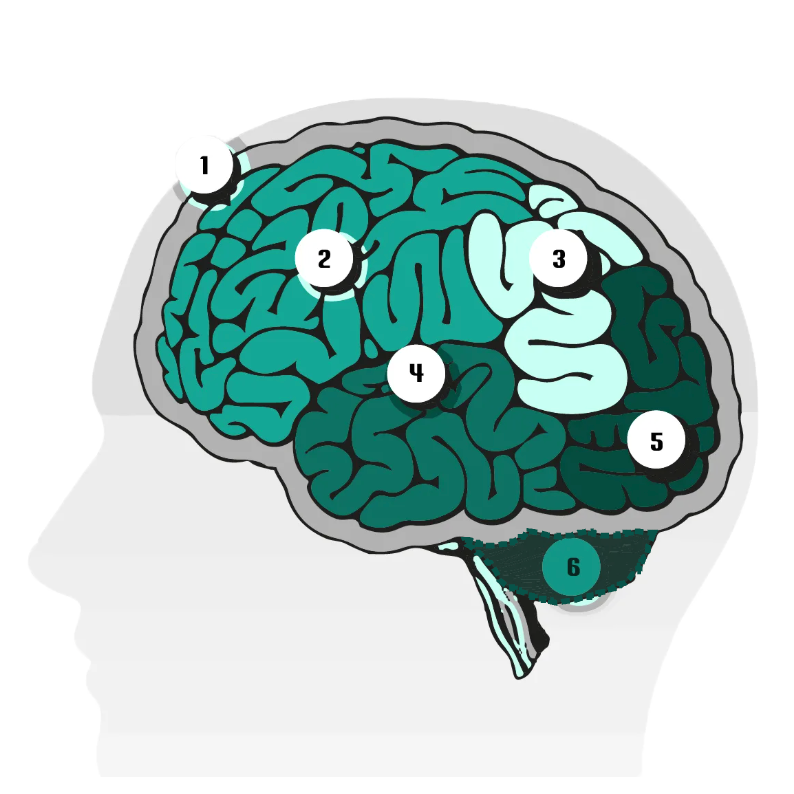
See which part of the brain does what
Different forms of demensia attack different regions of the brain first, which is why no two people's dementia looks quite the same, and why one person loses words while another loses judgement.
Our interactive brain tour walks through the six main regions: what each one does, and what changes when it is affected.
Caring For Someone With Dementia
None of this is obvious, and most of it is learned the hard way. These are the things that help most.
Communicating
- Speak calmly, and give them time to find their words.
- If they are angry or frightened, show that you understand it rather than correcting the facts.
- Avoid “don't you remember?”, it only makes the gap more frightening. Just remind them who you are.
- Keep two-way conversation going for as long as they can manage it, and let it be shorter as time goes on.
- When words are not working, change the activity, a photo album or a familiar book will often do what talking cannot.
- Leave their personal space theirs. Being loomed over is alarming for anyone.
Everyday care
- Keep the day predictable, washing, dressing and meals at the same times. Routine does a lot of the remembering for them.
- Write things down together: lists, appointments, a calendar somewhere obvious.
- Let them do as much of each task as they still can, even when it takes far longer than doing it for them.
- Say what you are about to do, step by step, before you help with washing or dressing.
- Choose clothes that are easy to manage, elastic waists, large zip pulls, fabric fastenings instead of laces and buttons.
- Use a proper shower chair. Most serious decline follows a fall.
- Serve meals in the same familiar place, and allow plenty of time to eat.
- Set up a reliable system for medication rather than relying on anyone's memory, including your own.
Our Dementia Support Group
If you or someone you love is living with dementia, and you feel alone and overwhelmed by it, our support group exists for exactly that.
It is a safe, unshowy space for people with dementia and for the people caring for them. We share what we are dealing with, learn from each other, and hear from people who know more about a particular part of it than we do. There are social activities too, it is not two hours of grimness.
Everyone is welcome, whether the diagnosis came last week or five years ago. You do not have to do this on your own.
How Home Angels helps
Carers Trained For Dementia
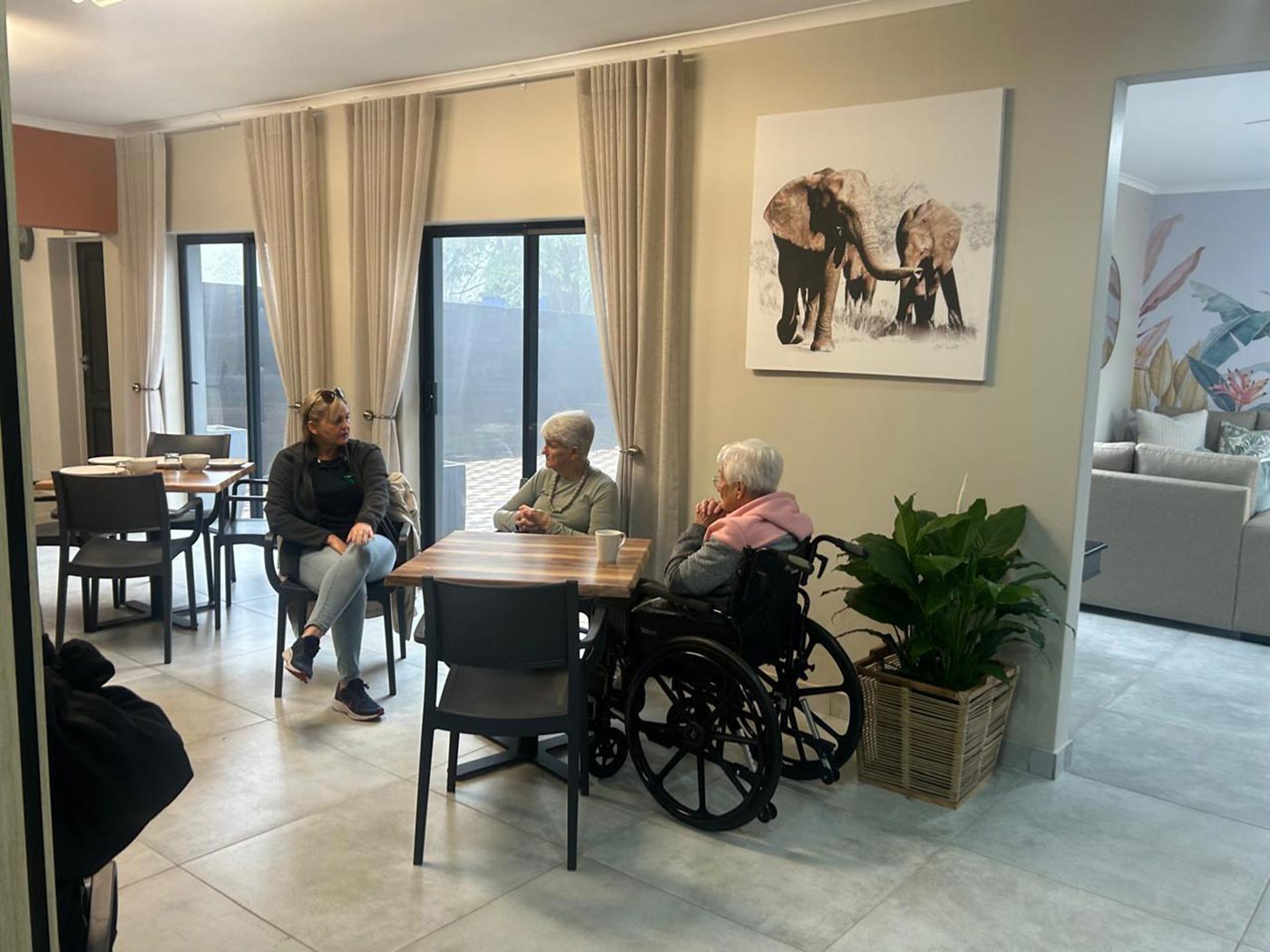
Our carers have completed both theoretical and hands-on training, and on average bring seven years of experience with elderly and frail people. Dementia care is prepared for specifically.
Day Care With Structure
Routine, company and gentle activity in a secure building where wandering is safe rather than frightening. See the facility.
Respite For The Family
The person doing the caring is the one most likely to break. Regular cover, a few days a week, or a night shift so you can sleep, is usually what keeps everything else working.
The information on this page is general and is not medical advice. If you are worried about someone, please speak to their doctor.
Talk to someone who has seen this before
Whether you want carers, day care, or just an honest conversation about what happens next, get in touch. We have walked a lot of families through this.
Prefer to talk right now? Talk to us on WhatsApp or call 064 429 6418.